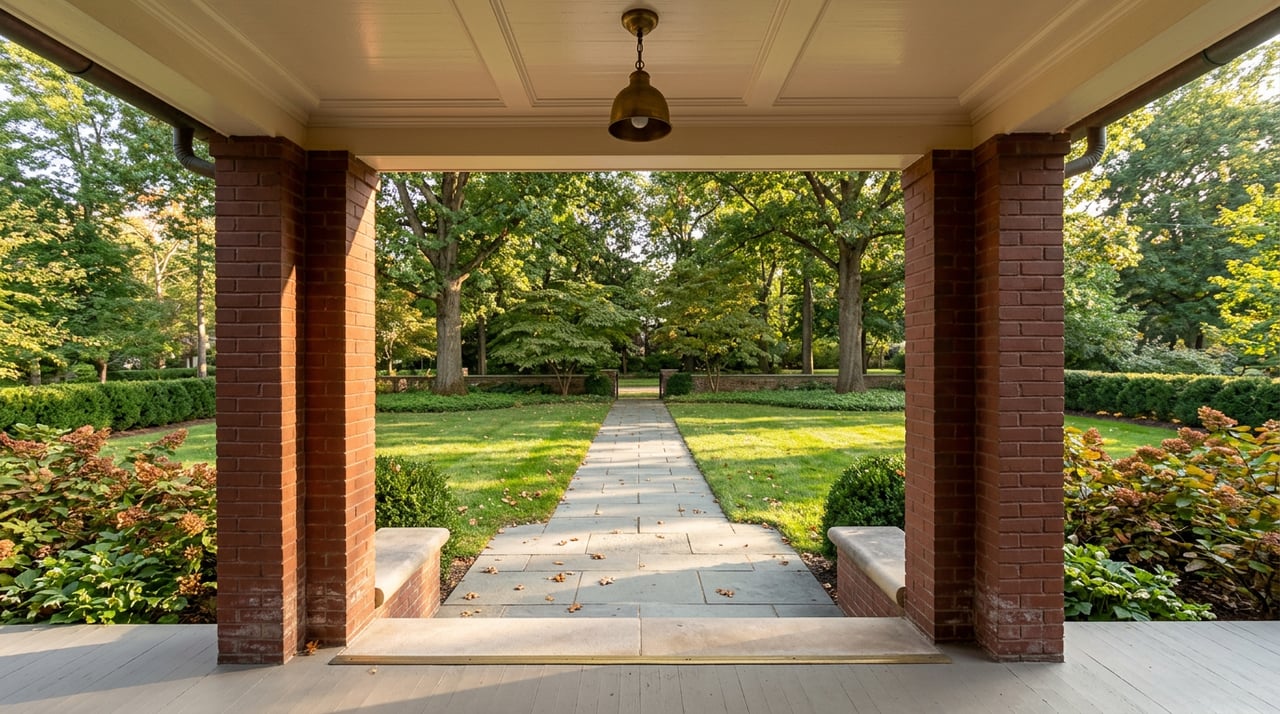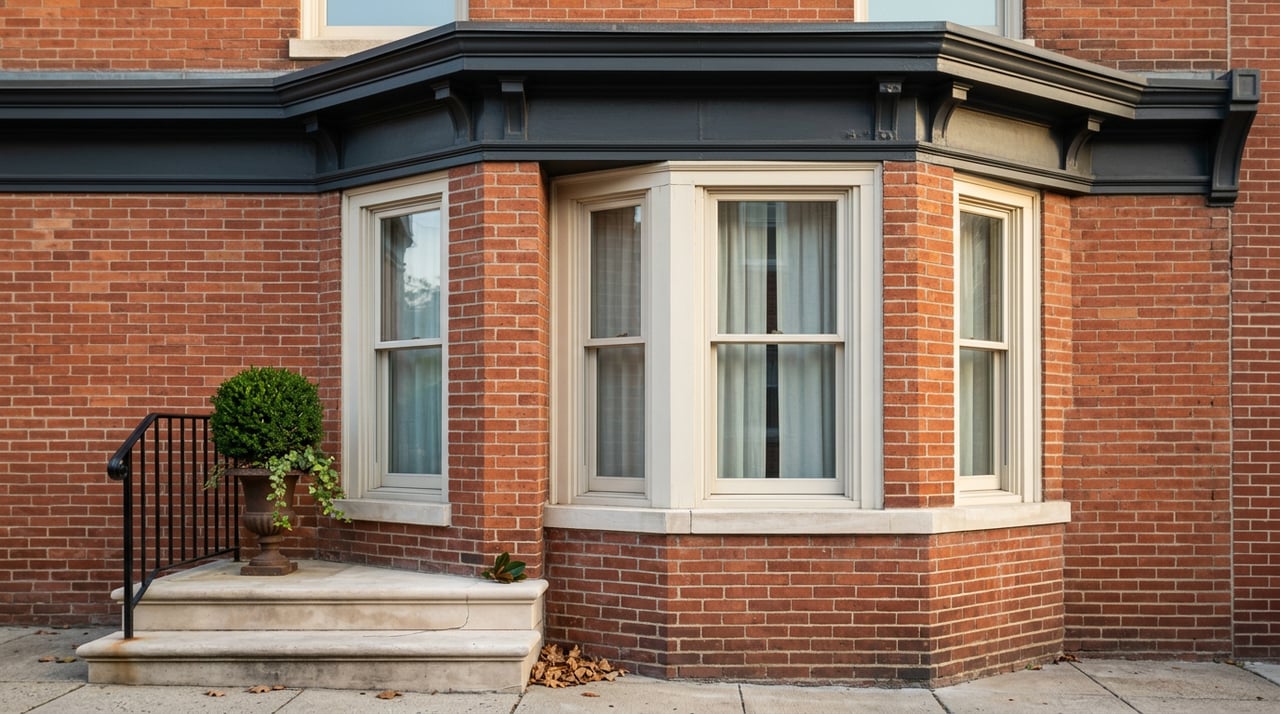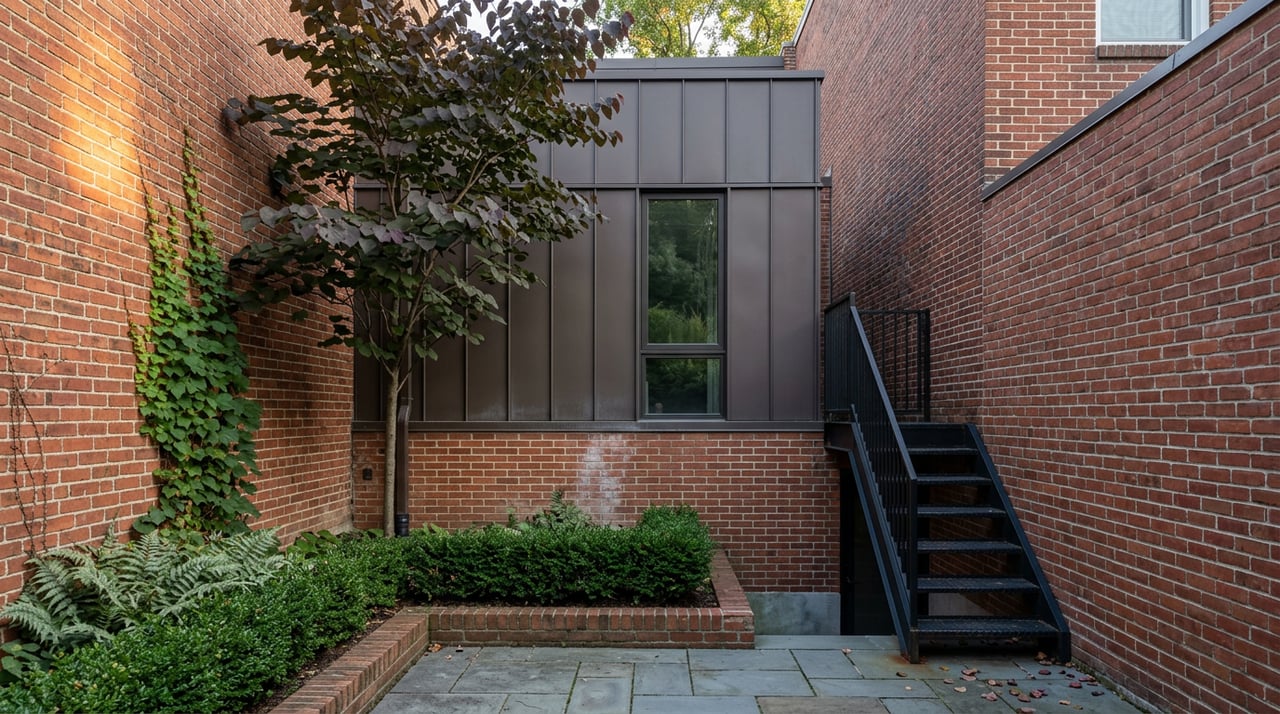
Every buyer's agent representing a client on a renovated Capitol Hill rowhouse asks some version of the same question before writing an offer: can you show me the file? Not the photos. Not the contractor invoices. The actual Historic Preservation Office paperwork proving the rear addition, the roof deck, or the new window openings went through the right review. Sellers who spent six figures on a beautiful renovation are sometimes caught without a clean answer.
That gap between finished work and documented work is where money actually moves on Capitol Hill right now. The district's historic review process doesn't just decide what gets built. Its calendar, its thresholds, and a recent change to DC preservation law now shape what a renovated rowhouse is worth at closing, somewhat independent of how good the work actually is.
The Board That Skips August
The Historic Preservation Review Board meets once a month, on the fourth Thursday, and it doesn't meet in August at all. This month is one of the months it simply isn't in session. Anyone who missed July's filing deadline for a project that needs a full hearing is looking at September at the earliest, not because the design has a problem, but because the calendar has a built-in gap.
That gap compounds. An Advisory Neighborhood Commission can request a 45-day deferral on any case it wants more time to review, and a single missed filing deadline or a single ANC objection can add two to three months to a project that might otherwise have cleared without controversy. None of that shows up in a renovation budget. All of it shows up in a listing date.
What Actually Needs the Full Board
Most Capitol Hill projects never reach the board at all. The Historic Preservation Office handles more than 95 percent of permit applications through its Expedited Review process, and same-day clearance is possible for in-kind repairs with complete materials on file. The distinction between a staff-level sign-off and a full hearing comes down to scale.
| Project type | Typical review track |
|---|---|
| In-kind repair or repointing | HPO staff, often same day |
| Window replacement matching the original | HPO staff, expedited |
| Rear addition under 250 sq ft footprint | Frequently staff-delegated |
| Rear addition over 250 sq ft footprint, or over 500 sq ft across two floors | Full HPRB hearing |
| Roof deck visible from a street | Full HPRB hearing |
| New front window or door openings, facade changes | Full HPRB hearing |
| Demolition of a contributing building | Full HPRB hearing |
A project that crosses one of these lines doesn't just take longer. It becomes a public record, discussed at a hearing, with a written decision that a future buyer's agent can pull.
The Five Questions the Board Actually Asks
When a case does go to a full hearing, the board is weighing five things every time, whether the case is a rear addition on A Street or a roof deck three blocks over:
- Massing and scale. Does the addition read as subordinate to the original house from the street or alley, or does it compete with it.
- Materials compatibility. Do new materials fit the historic fabric without pretending to be original.
- Reversibility. Could the addition be removed someday without damaging the historic structure underneath it.
- Character-defining features. Are original masonry, window openings, cornices, and porches left intact.
- Streetscape context. Does the project respect the spacing and rhythm of the block it sits on.
A seller who can point to the HPRB record showing their project satisfied these five points is handing a buyer's agent a closed argument. A seller who can't is handing them an open question, and open questions get priced into offers.
Why the Stakes Changed in 2024
DC's Protecting Historic Homes Amendment Act, enacted in 2024, raised the financial risk of skipping this process. A contractor who starts substantial work on a historic property before it clears HPO or HPRB now faces fines up to $25,000 per violation.
Capitol Hill has already seen what happens when a permit gets issued without the required historic referral. In one case at 231 10th Street SE, a contractor received a building permit for a rear addition that should have gone to the board first. Construction proceeded, a stop-work order followed, and the Historic Preservation Office ultimately recommended the board approve only a two-story rear addition, meaning the applicant was ordered to remove the third floor already built. The board voted 9-0 to back that recommendation. That case predates the 2024 law, so the consequence at the time was a forced teardown. A similar mistake today would carry that same design outcome plus a fine on top of it.
What This Actually Costs a Seller Today
The math around a renovation rarely lines up with how an appraiser sees it. Finished below-grade space, an English basement or a rental unit, typically gets discounted 50 to 75 cents on the dollar relative to above-grade square footage when an appraiser builds a comp. A seller who spent generously to finish a basement apartment often assumes that money adds dollar for dollar to value. It doesn't, and the paperwork gap makes the discount worse: an appraiser who can't confirm the space was legally created and properly permitted has even less reason to credit it fully.
The current market gives buyers more room to ask these questions than they had a year ago. Over the three months ending May 2026, Capitol Hill homes sold at a median price of $925,000, up 2.8 percent from the same stretch the year before, and May 2026 alone saw 220 homes close, up from 194 in May 2025. Time on market tells the more interesting part of the story. As of Redfin's most recent monthly snapshot, taken in July 2026, the typical Capitol Hill home was selling in 41 days, up from 33 days a year earlier, while the average sale price eased to $830,000, down roughly 9 percent year over year. Capitol Hill's own inventory, roughly 5,767 row houses as of data compiled through early July 2026, gives buyers plenty of comparable sales to check a listing against. In a market with that much time and that much comparison shopping, a permit file that raises questions instead of answering them is exactly the kind of thing that shows up as a lower offer or a longer negotiation, not a walk-away, but a discount.
What to Assemble Before You List
- Certificates of Appropriateness or HPO approval letters for every exterior change visible from the street or alley
- Contractor invoices tied to the approved scope of work, not just proof of payment
- Before-and-after photos that match the drawings HPO or HPRB actually reviewed
- A plain written note on any interior work that wasn't part of historic review, since most interior changes that don't touch the exterior fall outside HPRB's jurisdiction entirely
- If review is still open when you decide to list, a clear written status: what's filed, what's approved, what's pending
Start the Clock Before You Pick a Listing Date
A reasonable planning window is three to nine months for modest exterior work and six to twelve months or more for anything larger, once you account for staff review, a possible board hearing, and the building permit that follows. If you're weighing a spring 2027 listing and the project needs a full hearing, August 2026 is not too early to start the pre-application conversation with HPO.
A Few Questions Sellers Ask
Does historic review cover interior renovations too? Usually not. Most of what HPRB and HPO regulate is what's visible from public space: front facades, stoops, visible rooflines, front yard fences. Interior work that doesn't touch the exterior generally isn't part of the review.
What if I need to sell while a review is still open? Disclose it plainly. A clear account of what's been filed, what's been approved, and what remains outstanding gives a buyer's agent something to underwrite around, instead of a reason to walk.
Does the historic district cover all of Capitol Hill? Effectively, yes. Capitol Hill is DC's largest residential historic district, and the designation, which the Capitol Hill Restoration Society helped secure back in 1976, covers the core rowhouse blocks most buyers are shopping for today.
Renovation adds character. Documentation adds proof. On Capitol Hill, buyers, appraisers, and lenders are increasingly asking for the second thing before they'll fully credit the first. If you're planning a renovation with an eventual sale in mind, or you're sitting on a project that's further along than its paperwork, Ethan Carson has spent years working directly with Capitol Hill's developers and homeowners on exactly this handoff, from HPRB filing through the day the sign goes in the yard. Explore the portfolio to see how that work translates into listings that sell with the story, and the file, intact.