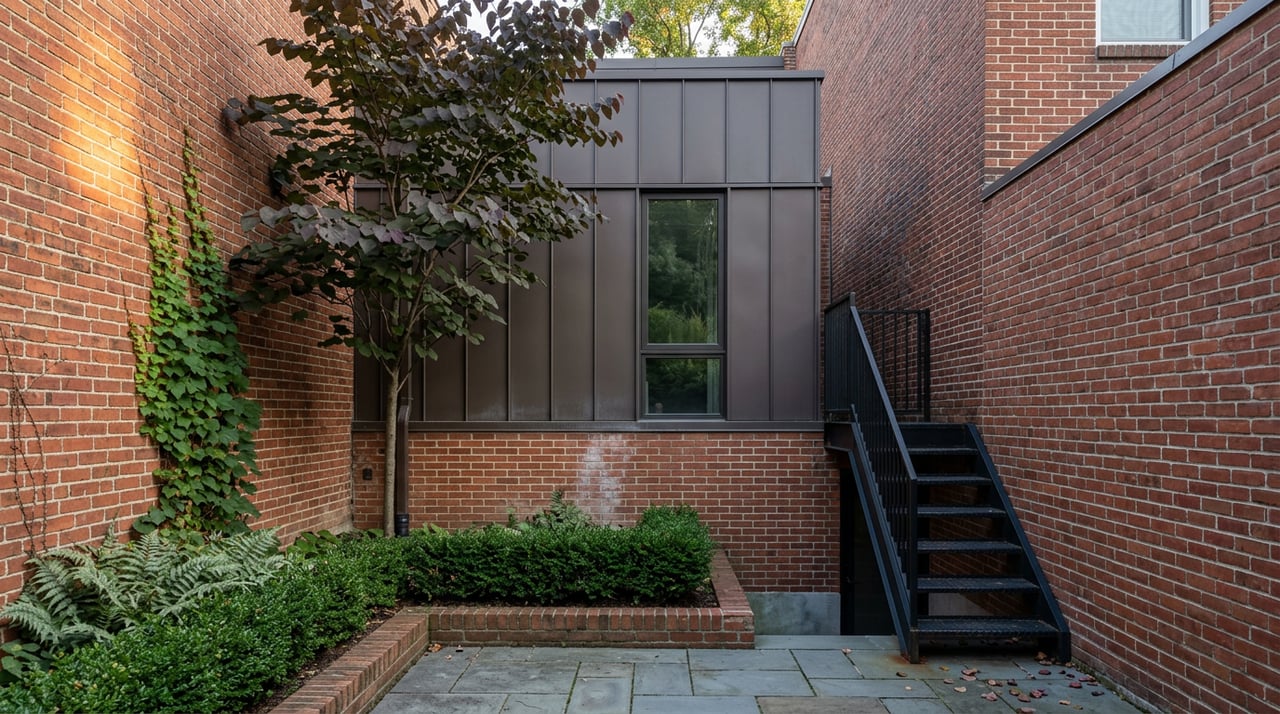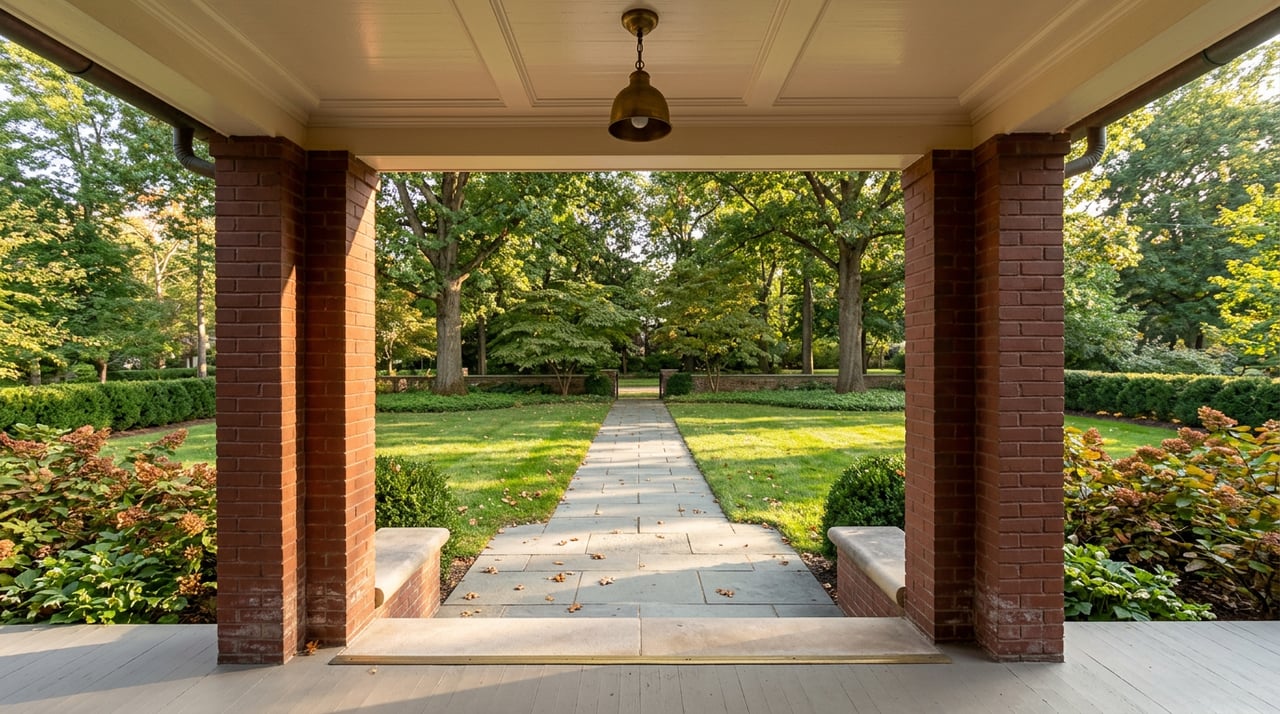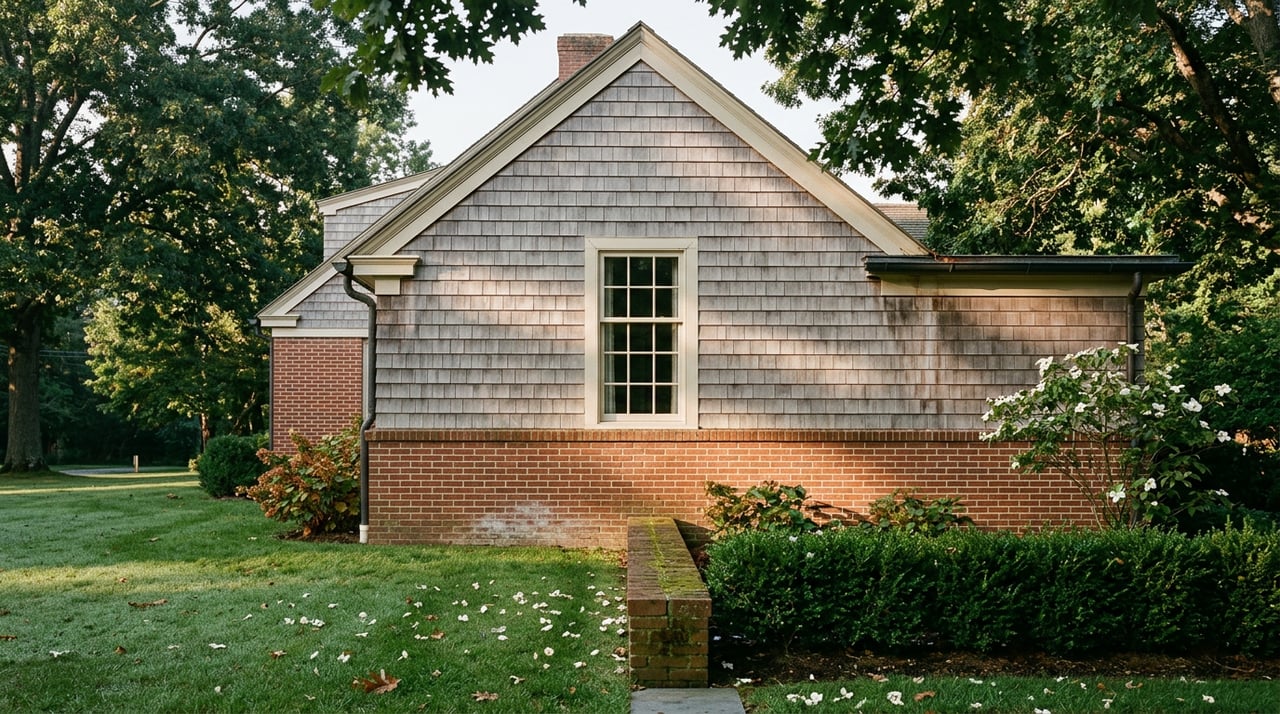
Chevy Chase Circle sits exactly on the line, the point where Connecticut Avenue crosses Western Avenue and Washington, DC ends and Montgomery County, Maryland begins. Walk the blocks on either side and the trees don't change. The brick doesn't change. The Sears catalog houses that Francis Newlands and the Chevy Chase Land Company built after 1890 run the same on both sides of the line, because they were built by the same company, in the same years, for the same reason: to sell lots along a streetcar route.
What changes is everything you can't see standing on the sidewalk. The tax bill. The permitting authority. And, right now, on the DC side only, a live and unresolved fight over what you're even allowed to do to the house once you own it. Most comparisons of Chevy Chase DC and Chevy Chase MD stop at a tax-rate spreadsheet. That spreadsheet is the least important number in this decision.
The Math Everyone Runs, and Why It's Incomplete
Here's the version most buyers hear: DC's residential property tax rate is 0.85 per $100 of assessed value, one of the lowest in the region. Montgomery County's rate runs closer to 1.05 per $100. Maryland side costs more, DC side costs less, decision made.
That comparison skips the deduction that actually determines your bill. DC's Homestead Deduction for tax year 2026 reduces a qualified owner-occupant's assessed value by $91,950 before the 0.85 percent rate ever applies. Run the numbers on a $1.5 million assessed home, in line with Chevy Chase DC's own median sale price over the three months ending May 2026, and the comparison looks different once the deduction is in the equation.
| Chevy Chase DC | Montgomery County, MD | |
|---|---|---|
| Assessed value | $1,500,000 | $1,500,000 |
| Homestead deduction | $91,950 | None applied upfront |
| Taxable value | $1,408,050 | $1,500,000 |
| Rate per $100 | $0.85 | $1.05 |
| Estimated annual bill | ~$11,968 | ~$15,750 |
The gap is real, roughly $3,800 a year, or about $315 a month on a home at this price point. It is also smaller than the headline rate comparison suggests, and it narrows further over time. Maryland's Homestead Tax Credit caps how fast a property's taxable assessment can rise each year at 10 percent, the same mechanism DC uses through its own assessment cap credit. Once you own the house for a few years, both sides are governed by the same kind of ceiling on annual increases. The day-one bill favors DC. The five-year trajectory is closer than either side's boosters usually admit.
Chevy Chase, Maryland, Is Not One Market
The second problem with the simple DC-versus-MD framing is that "Chevy Chase MD" isn't a market. It's a dozen small municipalities that happen to share a name, a developer, and a founding year, and they price nothing alike.
- Chevy Chase Village, incorporated in 1951 with just 721 homes, is the most exclusive of the group. Colonial and Tudor estates here trade at medians exceeding $2.6 million, and well-priced listings go under contract in under a week.
- Kenwood, known for its cherry-tree-lined streets and Kenwood Country Club access, carries medians closer to $3.5 million.
- Martin's Additions and the western sections offer Colonial and Craftsman homes at more accessible price points, the entry route into the Chevy Chase MD name without the Village or Kenwood premium.
A buyer who anchors on a single median for "Chevy Chase, Maryland" is averaging a country-club street with a starter Craftsman and calling it one number. The comparison that actually helps you is section to section, not border to border.
What the DC Side Is Doing Right Now
On the DC side, the market moved fast and got a little slower at the same time this year. Over the three months ending May 2026, the median sale price in Chevy Chase DC ran $1.5 million, up 2.1 percent from the same period a year earlier, at a median of $609 per square foot. Homes sold after an average of 17 days on market, up from 14 days the prior year, and 57 homes sold in May 2026 compared with 44 the year before. More inventory moved. It took a few extra days to move it. That's a market cooling at the margins, not a market that's stopped.
Sale-to-list ratios have historically run above 100 percent here, and single-family homes in particular have carried some of the highest ratios in the city in recent years. If you're competing for a house on this side of Western Avenue, you're still competing.
For buyers priced out of the single-family stock, the condo and co-op buildings along Connecticut Avenue offer a real entry point. Median pricing for that segment has recently run around $322,000, a fraction of the single-family median and the most accessible way into the neighborhood's name and school assignment without the seven-figure commitment.
The Bigger Variable: What You're Allowed to Build
Here's the friction that a tax-rate table won't show you, and it only exists on the DC side.
In October 2023, a group called the Chevy Chase DC Conservancy filed a nomination with DC's Historic Preservation Office to designate much of the neighborhood, including its residential blocks and the Connecticut Avenue commercial corridor, as a historic district. The Historic Preservation Office accepted the application as complete the following month. If approved, any exterior renovation, addition, or demolition inside the designated boundary would require review by DC's Historic Preservation Review Board before a permit is issued.
This is not a quiet or settled process. The board of a rival organization, Historic Chevy Chase DC, came out publicly against the nomination, arguing that nothing about the neighborhood's character had changed since a nearly identical push failed in 2008 after the local Advisory Neighborhood Commission voted against it. Greater Greater Washington published a detailed critique of the application's underlying evidence, arguing it doesn't meet the National Register criteria the board is required to apply. The opposition also connects the historic district push to a separate, DC Council-approved effort to allow more housing density along Chevy Chase's commercial corridor, tied to 2021 amendments to the city's Comprehensive Plan for the Rock Creek West planning area. Two DC-led processes, pointing in opposite directions, both centered on the same handful of blocks.
As of the most recent public record, the Historic Preservation Review Board has not issued a final ruling. If you're a buyer eyeing a DC-side property for a gut renovation, an addition, or a teardown and rebuild, you are currently buying into a house whose future regulatory ceiling is genuinely unknown. At last count DC had 70 historic districts citywide, 37 of them residential neighborhoods, including nearby streetcar-era neighborhoods like Mount Pleasant and LeDroit Park. If Chevy Chase joins that list, the review process that already governs renovation work in those neighborhoods would apply here too. If the nomination fails again, as it did in 2008, no such review layer exists and your renovation plans move at the pace of a standard DC permit.
None of this exists on the Maryland side, where zoning and land use run through Montgomery County and each municipality's own governance rather than DC's Historic Preservation Office.
For a buyer weighing DC against Maryland purely on cost, this changes the calculation. The property tax gap between the two sides amounts to a few thousand dollars a year, narrowing further once both jurisdictions' assessment caps kick in. The historic district question is a different order of variable entirely. It doesn't just affect your carrying cost. It affects whether the renovation you're planning to fund that carrying cost gets approved at all.
A few questions worth asking before you write an offer, no matter which side of Western Avenue you're on:
Does the pending nomination apply to a house that's already been renovated? Yes, if the property falls within the proposed boundary and the district is ultimately approved, future exterior work would still require review regardless of what's already been done to the house. Past renovations don't exempt a property once it sits inside a designated district.
Is the tax gap enough by itself to choose one side over the other? Based on the current rate and deduction structure, the gap runs a few thousand dollars a year on a home in the $1.5 million range, and it narrows over time as both jurisdictions cap annual assessment growth at 10 percent. It's a real number. It's rarely the deciding number once you factor in what a specific block, price segment, or renovation plan actually requires.
Where can I check the current status of the historic district case myself? DC's Office of Planning maintains a public case file for the nomination, and it's worth checking before you finalize plans for any exterior work on a DC-side property.
The house on either side of Western Avenue was built by the same company, in the same decade, for the same reason. What it costs you to own, and what you're allowed to do with it, depends entirely on which side of that line you're standing on. Run both numbers before you run either one alone.
If you're weighing a purchase in Chevy Chase, whether you're comparing sections on the Maryland side or trying to understand what a pending DC land use decision means for a renovation you're planning, Ethan Carson can walk through the specifics with you block by block.