If you have ever walked from Kalorama into Adams Morgan and wondered why the architecture shifts block by block, you are seeing one of Washington’s most layered historic landscapes in real time. These neighborhoods were shaped by streetcar-era growth, changing housing demand, and a long arc of preservation that still affects what buyers and owners see today. If you want to understand what styles define the area, where they tend to appear, and what those details can tell you about a home, this guide will help you read the streetscape with more confidence. Let’s dive in.
How Kalorama and Adams Morgan Developed
Kalorama and Adams Morgan are not a single-style neighborhood. The District describes the area as a collection of late-19th-century subdivisions, including Washington Heights, Lanier Heights, Kalorama Triangle, and Reed-Cooke, that developed during the streetcar era.
That history matters because it explains the mix you see today. Kalorama Triangle began with larger detached residences in a more semi-suburban setting, then quickly filled in after the Columbia Road streetcar line opened in 1897 with rowhouses, townhouses, and apartment buildings.
Sheridan-Kalorama followed a somewhat different path. The District describes it as an early-20th-century residential neighborhood that blends urban and suburban characteristics, with a period of significance from 1890 to 1945.
For today’s buyer or homeowner, that means the architecture here tells a timeline. You can move from mansion-scale homes near Massachusetts Avenue to compact but formal rowhouses and then to low-rise apartment buildings along major corridors, often within just a few blocks.
Where Different Styles Show Up
Kalorama Triangle
Kalorama Triangle tends to be the place where you will notice a cohesive mix of rowhouses, townhouses, apartment buildings, and small commercial buildings. It was fully developed by 1931, and much of its character comes from buildings constructed in a relatively short period.
That gives the neighborhood a strong sense of visual continuity, even though the styles vary. Many buildings carry formal architectural cues that make modest urban homes feel more substantial and refined.
Sheridan-Kalorama
Sheridan-Kalorama leans more toward grand houses, embassy-scale residences, and luxury apartment buildings. The architecture here often shifts away from late-Victorian forms and toward more classically inspired designs such as Colonial, Georgian, Federal, and Beaux-Arts-influenced buildings.
If you are drawn to formal facades, symmetrical compositions, and a sense of quiet scale, this part of the area often delivers that experience. It is one reason the neighborhood feels distinct even though it sits so close to denser mixed-building corridors.
Adams Morgan Corridors
In Adams Morgan, the building stock reflects density and streetcar-era growth. You are likely to see smaller-scale rowhouses on residential streets, larger apartment buildings near major routes, and small commercial buildings along corridors such as Columbia Road, 18th Street, Florida Avenue, 16th Street, and Connecticut Avenue.
The District notes that many of the commercial buildings are small in scale, often limestone-clad, and built with large show windows. That is a clue to the area’s original streetcar retail pattern rather than a later auto-oriented development style.
Architectural Styles You’ll Notice Most
Beaux-Arts and Classical Styles
Some of the grandest architecture in the area appears in Sheridan-Kalorama and nearby Meridian Hill. The District describes many of the mansions there, built largely between 1905 and 1928, as examples of Beaux-Arts eclecticism.
For a casual observer, these homes often read as formal and stately. Look for symmetrical facades, elegant massing, red brick or stone trim, and classical detailing that gives the building a composed, almost ceremonial look.
These styles also influenced luxury apartment buildings. In some cases, those buildings were designed to feel almost like private houses in apartment form, with formal rooms and layouts that appealed to residents who wanted space and status in a multifamily setting.
Queen Anne Rowhouses
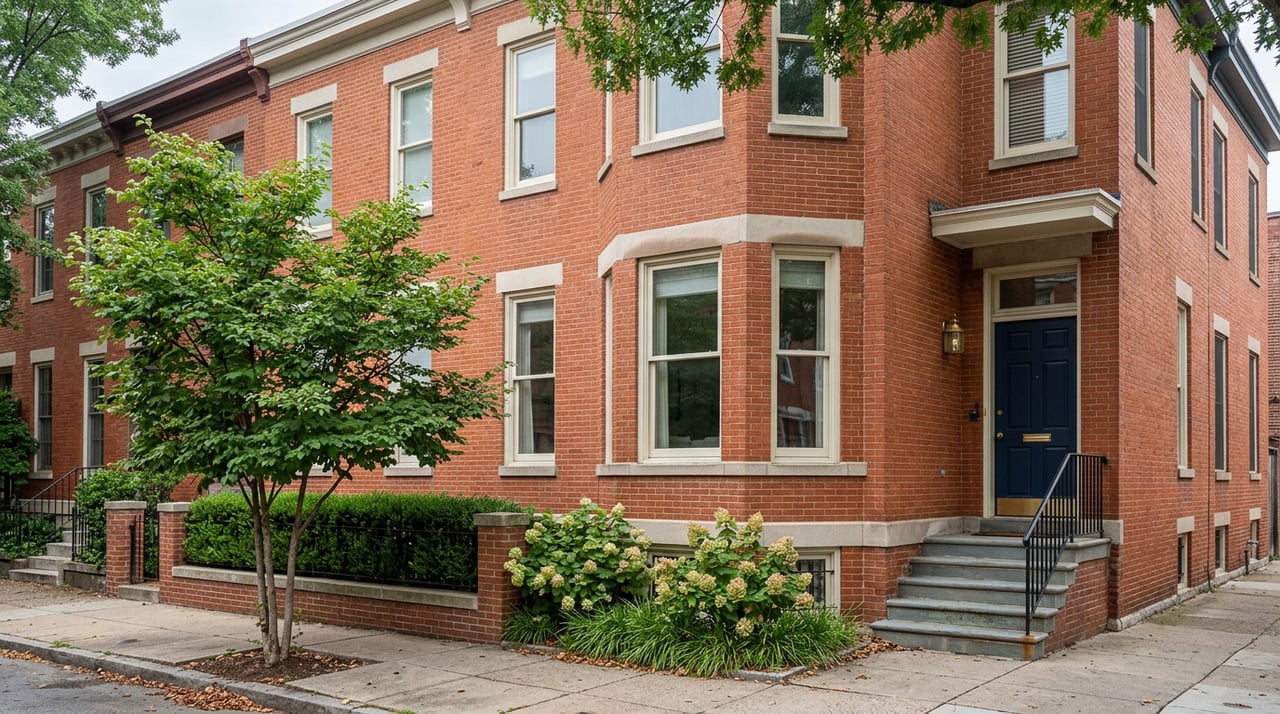
If you like movement, texture, and ornament, Queen Anne rowhouses are among the easiest to spot in Adams Morgan. The District points to projecting bays, turrets, and ornate brickwork as common clues.
These facades usually feel lively rather than restrained. They often break up the flat plane of the street wall and add visual variety through shape, color, and decorative masonry.
Romanesque Rowhouses
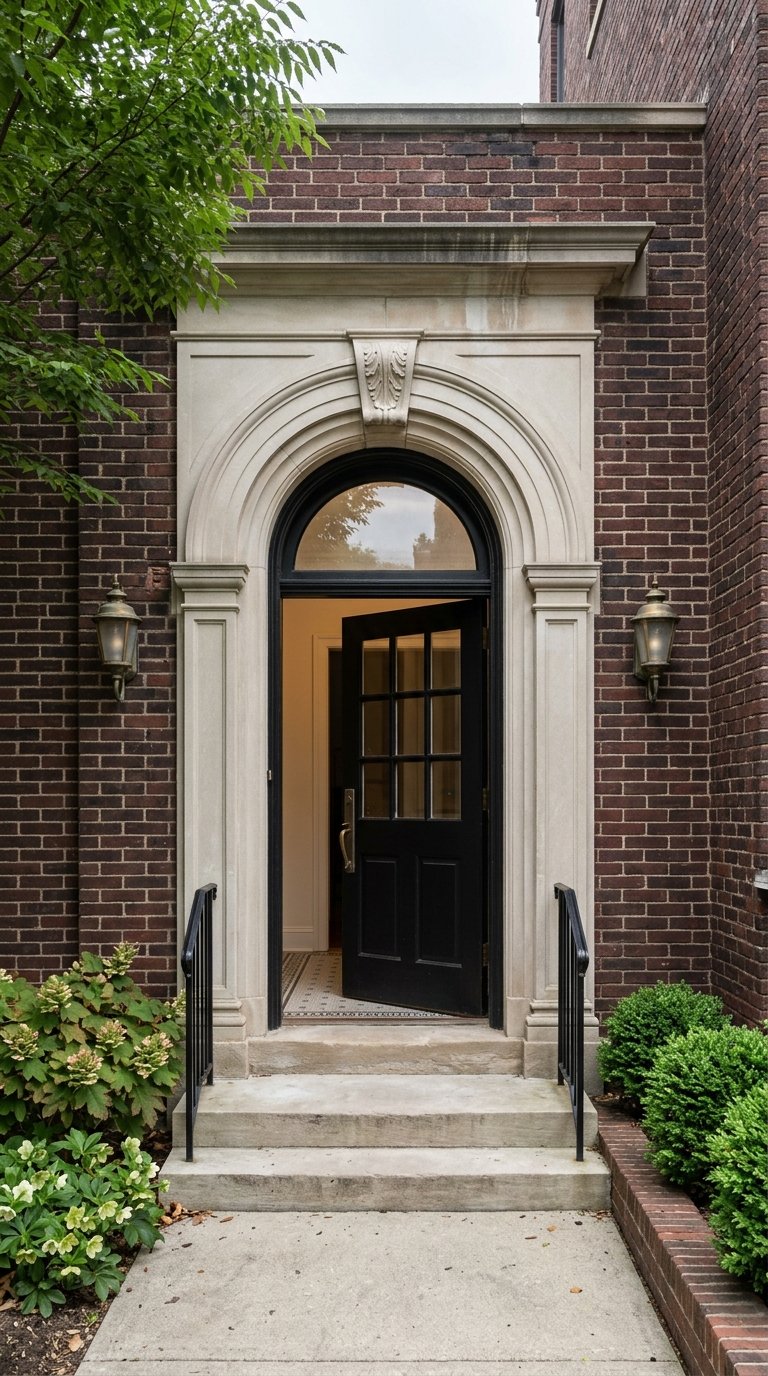
Early rowhouses in Kalorama Triangle, especially those from about 1900 to 1906, often show Romanesque influence. These homes can feel heavier and more grounded than later revival styles.
Look for round arches, rusticated stone, foliate carving, and dark red or brown brick. If a rowhouse feels solid, sculptural, and a little dramatic, Romanesque details may be part of the reason.
Colonial and Georgian Revival
Later rowhouses and houses in both Kalorama and Adams Morgan often shift toward Colonial Revival and Georgian Revival styles. These designs are usually more balanced and restrained than Queen Anne or Romanesque examples.
Visual clues include symmetrical facades, dormers, multi-pane windows, porticos, and stone trim. If the building feels orderly and centered, with details that reference earlier American and English traditions, you are likely looking at one of these revival styles.
Arts and Crafts and Mission Details
Some later buildings in Kalorama Triangle show Arts and Crafts or Mission influences layered into otherwise traditional forms. The District highlights features such as red tile roofs, patterned brickwork, columned porticos, and exposed rafters.
These details are useful because they often appear as accents rather than full stylistic overhauls. In practice, you may see a rowhouse that still fits the street neatly but includes warmer materials or roofline details that soften its formal look.
Why Apartment Buildings Are So Common
One of the biggest surprises for some buyers is how many apartment buildings appear in a neighborhood known for historic homes. The reason is practical and rooted in the area’s development pattern.
As streetcar access improved and land values rose, building apartments along corridors such as Connecticut Avenue and Columbia Road became more viable than limiting development to rowhouses alone. That is why apartment houses became a major building type in both Kalorama Triangle and Sheridan-Kalorama.
Kalorama Triangle saw 25 apartment buildings constructed between 1901 and 1927, while Sheridan-Kalorama saw 30 built between 1902 and 1940. Some were modest low-rise buildings with projecting bays and bracketed cornices, while others were designed as luxury residences with high ceilings, formal rooms, garages, roof gardens, and even one-apartment-per-floor layouts.
This history helps explain a key point for today’s market. In these neighborhoods, apartment living is not a recent departure from the historic fabric. It has been part of the architectural story for well over a century.
How to Read a Facade Like a Local
If you are touring homes in Kalorama or Adams Morgan, a few visual cues can help you quickly identify what you are seeing:
- Round arches and dark brick often suggest Romanesque influence.
- Turrets, projecting bays, and ornate brickwork often point to Queen Anne design.
- Symmetry, dormers, and porticos often signal Colonial or Georgian Revival styles.
- Red tile roofs and exposed rafters can indicate Mission or Arts and Crafts details.
- Grand scale and formal classical detailing often suggest Beaux-Arts or related classical styles.
These clues are helpful for more than casual appreciation. They can also shape how a property is marketed, renovated, or evaluated within the context of the block and the broader neighborhood.
Why Preservation Matters Here
Much of this area sits within local historic districts, and the District’s Historic Preservation Office states that historic landmarks and districts are officially recognized and protected for their cultural and aesthetic value. In practical terms, that means exterior changes and additions may be shaped by preservation review and, in some places, district-specific design guidelines.
That context matters if you are buying, selling, or planning updates. A home’s architectural style is not just visual character. It may also influence what kinds of exterior work are reviewed and how a property fits into the historic streetscape.
The preservation timeline also shows how central this architecture is to neighborhood identity. Kalorama Triangle was designated in 1987, Sheridan-Kalorama in 1989, Washington Heights in 2006, and Meridian Hill in 2014.
What This Means for Buyers and Sellers
For buyers, the biggest takeaway is that “historic character” means different things on different blocks. In one area, it may mean a Romanesque rowhouse with heavy masonry details. In another, it may mean a classically composed detached house or a low-rise apartment building designed to feel like a private residence.
For sellers, that variety creates an opportunity. When a home’s style, period details, and place within the neighborhood story are clearly understood, the property can be positioned with more depth and precision.
That is especially true in a place like Kalorama, where architecture and provenance are part of what buyers respond to. The strongest presentation often goes beyond square footage and finishes to explain how a home fits into the area’s larger design history.
If you are thinking about buying or selling in Kalorama or Adams Morgan, working with someone who can translate those details into clear market context can make the process feel much more grounded. To see how neighborhood knowledge and historic storytelling come together in practice, explore the portfolio at Ethan Carson.
FAQs
What architectural style is most common in Kalorama Triangle?
- Kalorama Triangle is best known for its mix of rowhouses, townhouses, and apartment buildings, with styles that include Romanesque, Georgian Revival, Colonial Revival, and some Arts and Crafts or Mission details.
What architectural style stands out in Sheridan-Kalorama?
- Sheridan-Kalorama is especially associated with grand houses and luxury apartment buildings influenced by Colonial, Georgian, Federal, and Beaux-Arts-inspired classicism.
Why does Adams Morgan have so many apartment buildings?
- Apartment buildings became common because streetcar access and rising land values made multifamily development practical along major corridors such as Columbia Road and Connecticut Avenue.
How can you identify a Romanesque rowhouse in Kalorama?
- Look for round arches, rusticated stone, foliate carving, and dark red or brown brick, especially on early 1900s rowhouses in Kalorama Triangle.
Are Kalorama and Adams Morgan in historic districts?
- Yes. Much of the area falls within local historic districts, and exterior changes may be shaped by District preservation review and neighborhood-specific guidelines.