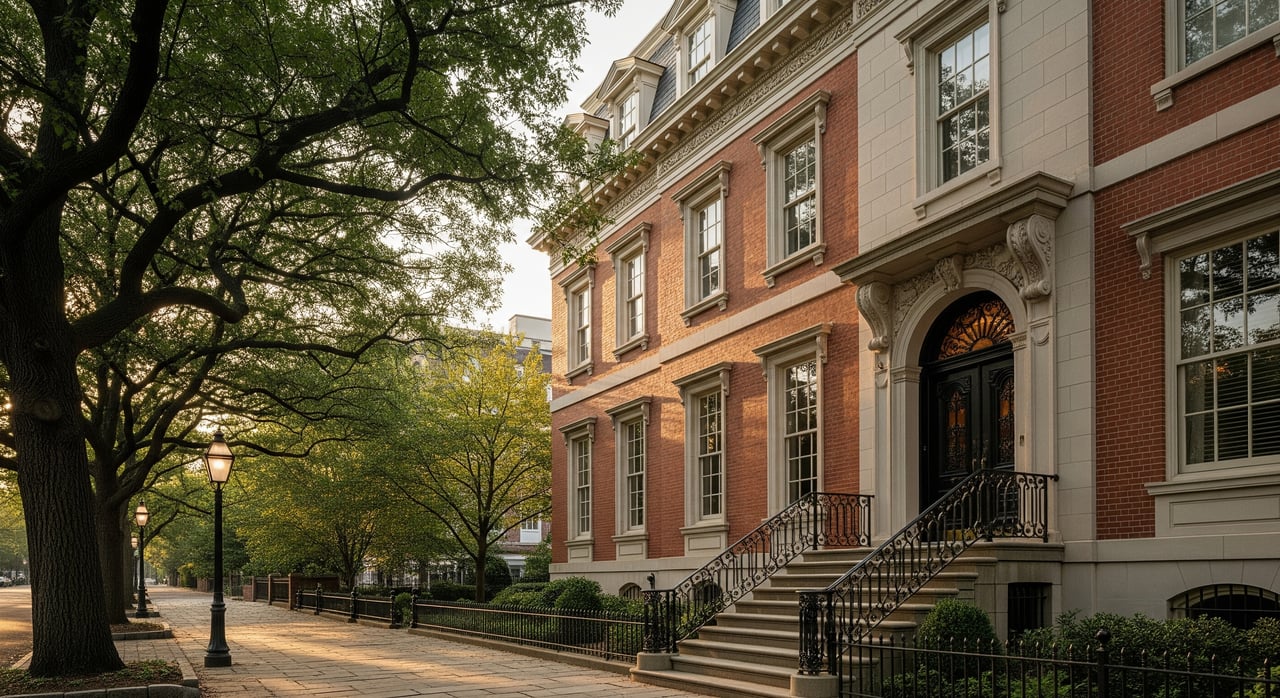
Love Kalorama’s grand rowhouses and tree-lined blocks, but not sure what a D.C. historic district means for your plans? You are not alone. Many owners and buyers want clarity on what is regulated, how approvals work, and how it all affects value. In this guide, you will learn the practical rules, timelines, and smart steps that help you plan with confidence. Let’s dive in.
Historic district basics in D.C.
Local vs. National Register
If a Kalorama property is inside a local D.C. historic district or is a designated local landmark, it is subject to local preservation review for certain exterior changes. A National Register of Historic Places listing is mostly honorific and does not, by itself, impose local design review. Some properties have both recognitions, but the local designation is what triggers regulatory review.
Who reviews your plans
The D.C. Historic Preservation Office (HPO) manages intake, guidance, and staff-level approvals. The Historic Preservation Review Board (HPRB) hears major or complex cases that are not resolved by staff. The D.C. Department of Buildings (DOB) issues building permits and will not issue permits for work that requires preservation review until HPO or HPRB approval is complete.
What triggers review
Local review focuses on exterior changes visible from public rights-of-way. Interior work is usually not regulated unless an interior is separately designated. Projects are evaluated for compatibility using the Secretary of the Interior’s Standards for Rehabilitation and local guidelines.
What work needs approval
- Routine maintenance and like-for-like repairs, such as in-kind roofing or repointing, are often staff approved or exempt if truly in-kind. Keep clear documentation.
- Painting practices vary. Repainting in the same color may be simpler, while changing colors on prominent facades can be reviewed. Confirm current HPO practice.
- Window repairs or replacements are frequently reviewed. Matching original profiles and materials has a higher chance of staff approval than changing styles or installing incompatible materials on a primary facade.
- Additions, dormers, and rear or side extensions visible from the street usually require review, and larger or more visible projects often go to HPRB.
- New construction and demolition receive high scrutiny, with demolition of contributing buildings often facing strict standards and possible denial.
- Fences, stoops, porches, signage, and storefront changes are typically reviewed if visible from the public way.
- Solar panels, mechanical equipment, and accessibility upgrades are reviewed for visibility and compatibility. Setbacks and low-visibility placements are easier to approve.
How the review and permits work
Typical workflow
- Verify historic status and boundaries to confirm local designation.
- Meet with HPO early for concept or pre-application guidance, especially for complex work.
- Submit a preservation application. Staff-level review can resolve many straightforward cases.
- If needed, HPRB schedules a public meeting or hearing for major or contested projects.
- Receive preservation approval, sometimes with conditions.
- Apply for DOB building permits and include preservation approvals.
- Follow any preservation conditions during DOB inspections.
Timeline expectations
- Staff-level reviews for straightforward repairs often take a few weeks to 1 to 2 months, depending on submittal quality and workload.
- HPRB scheduling and decisions for major projects commonly run 6 to 12 weeks, with complex cases taking longer.
- After preservation approval, allow several more weeks for DOB permits, longer if zoning relief is involved.
- Plan for multi-month cycles on demolition or new construction, and potential community input.
Costs, value, and market impacts in Kalorama
Historic designation helps keep Kalorama’s architecture cohesive and its streetscape predictable, which many buyers value. In this neighborhood, architectural integrity and character can be strong selling points. Some buyers may worry about added time or cost, but others appreciate the stability and heritage.
Empirical research commonly shows neutral to positive effects on property values and reduced volatility, though results vary by market and property type. In Kalorama, luxury and design-focused buyers often see preservation as a feature, not a bug.
Costs to factor into your plan
- Matching historic materials, profiles, and craftsmanship can increase budgets.
- Longer design and permit timelines can add carrying costs.
- Experienced preservation architects and contractors may charge premiums, but they can reduce risk and speed approvals.
- Older structures may need more maintenance, and good preservation practices help protect your investment over time.
Incentives and limitations
A federal 20 percent historic tax credit may apply to certified rehabilitations of income-producing properties. This credit does not apply to owner-occupied single-family primary residences. If you own a multifamily rental or a commercial property, consider exploring eligibility with the appropriate preservation offices.
Local incentives or grants may be available at times. Policies and programs can change, so confirm current options with D.C. HPO before you budget.
Smart planning checklist
- Verify status: Confirm if your property sits within a local historic district or is locally landmarked, and whether past approvals or conditions exist.
- Start early: Schedule an HPO concept review before you complete full drawings to avoid redesigns.
- Hire experience: Choose architects and contractors with D.C. preservation approvals on their resume. Request examples.
- Prepare a complete submittal: Clear photos, existing conditions, and material samples help speed staff review.
- Budget contingencies: Add 10 to 30 percent for specialized materials and potential design revisions. Build 1 to 3 months into your schedule for staff review or 3 to 6 plus months for HPRB-level work, plus DOB permit time.
- Protect your contract: Include historic-review contingencies, define who owns delay risks, and plan for neighbor or community input.
- Avoid pitfalls: Do not start visible exterior work before approvals. Do not assume National Register listing equals local regulation. Do not underestimate custom windows, slate, or masonry costs.
Selling or buying in a historic district
If you are selling, disclose the property’s historic status and share documentation for any approved alterations and related conditions. Buyers value a paper trail because it removes uncertainty. Properties with recent, documented approvals can feel more predictable to the next owner.
If you are buying, write in time for preservation due diligence. Include a clause to verify permit history and check for unresolved preservation conditions or violations. Budget for design and timeline adjustments if you plan to renovate.
Marketing matters in Kalorama. Thoughtful storytelling about provenance, craftsmanship, and compliant updates can lift demand. With Compass Concierge and high-quality visuals, you can position a historic home to stand out while respecting its character.
Ready to chart a clear path for your Kalorama home or next purchase? Connect with a local expert who understands preservation, renovation economics, and value. Reach out to Ethan Carson to plan your next step.
FAQs
What is the difference between a D.C. local historic district and the National Register?
- Local designation triggers design review for exterior changes visible from public rights-of-way, while National Register listing is largely honorific and does not create local regulatory controls by itself.
Which Kalorama projects usually need HPRB review instead of staff approval?
- Major additions, visible new construction, demolition requests, and designs that cannot be resolved at staff level typically go to HPRB for a public hearing and decision.
How long does a typical window replacement approval take in Kalorama?
- If the replacement closely matches existing profiles and materials, staff review can often resolve it within a few weeks to 1 to 2 months, depending on workload and submittal quality.
Can you add solar panels to a historic home in Kalorama?
- Yes, if panels are placed to minimize visibility from the street; HPO generally favors low-visibility, set-back installations that respect the historic character.
Do interior renovations require historic review in D.C.?
- Interior work is usually not regulated unless an interior is separately designated, but you still need standard building permits as required by DOB.
Can you repaint a historic home a new color in Kalorama?
- Repainting in the same color may be simpler, while changing colors on prominent facades can be subject to review; confirm current HPO practice before you begin.
Are there tax credits for owner-occupied single-family homes in Kalorama?
- The federal 20 percent historic tax credit applies to income-producing properties, not owner-occupied single-family primary residences.
Does historic status help or hurt resale value in Kalorama?
- Many buyers value the neighborhood’s architectural integrity and stability, and studies often show neutral to positive value effects, though outcomes vary by property and project type.